Data Center Pushupputs Pressure on Midterm Candidates in Red States
New health studies and local opposition are turning the expansion of AI infrastructure into a decisive issue for voters in key swing districts.
By Andrew Yang ·
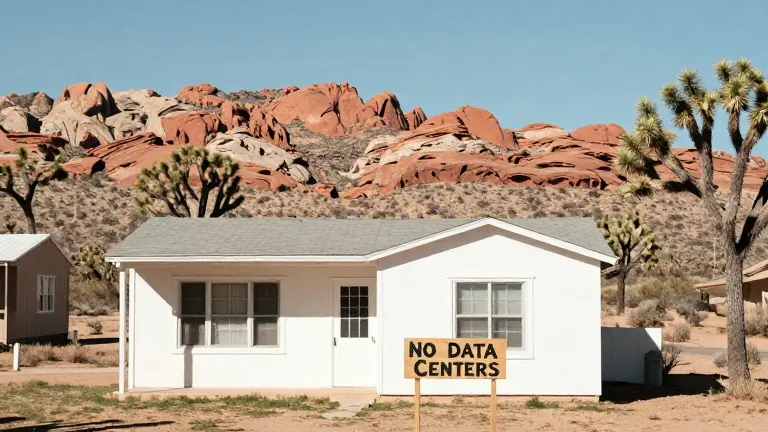
The rapid expansion of artificial intelligence infrastructure has transformed into a central battleground for the November midterms. In Page, Arizona, residents are mobilizing against a proposed 10 billion dollar data center complex. The development threatens to alter the local environment in a town known for its arid desert landscape and proximity to Horseshoe Bend.
Doug Herrera, 64, stands on his front porch in the town of 7,000 people, surrounded by yard signs opposing construction. He cites light pollution, rising temperatures, and noise as primary concerns. Herrera notes that the area already faces air quality issues from nearby uranium mining. He fears the new facility will add to that burden despite his patriotism.
The conflict in Page mirrors a national trend where local opposition is reshaping political alliances. In the close race for Arizona's 1st Congressional District, candidates are divided on the issue. Republican Jay Feely, who received an endorsement from President Donald Trump, argues that data centers are essential for economic competitiveness. His Democratic opponent, Amish Shah, seeks a pause on new approvals. A poll by Noble Predictive Insights found that 57 percent of registered voters in the state oppose further construction.
Research published by the University of California-Riverside projects that emissions from these facilities could cause nearly 1,300 deaths annually by 2030. The study estimates the public health burden will exceed 20 billion dollars per year by 2028. Critics also point to noise levels exceeding 90 decibels and the use of synthetic chemicals in cooling systems, which can accumulate in human tissue.
The issue is particularly volatile in reliably red states like Ohio and Texas, where hundreds of facilities operate. In Ohio, more than a dozen local referendums regarding data centers will appear on ballots this year. Former Senator Sherrod Brown is attacking incumbent Republican Jon Husted in the U.S. Senate race, labeling him the face of data centers. A memo from the National Republican Senatorial Committee described the issue as an anchor hanging around Husted's neck.
Lee Hannah, a political science professor at Wright State University, notes that the grassroots opposition has emerged quickly. He explains that decisions made by local officials just a year ago to support these projects are now viewed as career-ending risks. The opposition is strongest in rural areas where the facilities are typically built, a demographic that has historically provided insurmountable margins of support for Republican candidates.
The Data Center Coalition argues that existing regulations limit emissions and that backup power usage is minimal in major markets. Dan Diorio, the group's executive vice president, states that the industry is committed to being responsible partners. Despite this, the political stakes remain high as the November 3 election approaches.