Johnson's warning: A Democratic House brings two years of chaos, he said
Speaker Johnson cited France's unrest and DSA influence in his final campaign push, but Democrats have now secured a 223 seat majority in the House.
By Andrew Yang ·
The warning from House Speaker Mike Johnson has now met a decisive result. In the days leading up to Tuesday's election, Johnson argued that a Democratic majority in the House would trigger a period of instability defined by partisan retribution and radical policy shifts. He used specific examples from abroad and internal party dynamics to paint a picture of what he called a dark harbinger for the nation. Voters, however, delivered a sweeping victory for Democrats, who now hold a commanding lead in the chamber according to early returns.
Johnson's central argument rested on the idea that the current Democratic leadership is no longer a moderate force but a vehicle for the far left. In an op-ed published in USA Today on October 30, he wrote that Democrats have bent the knee to their far-left wing. He noted that even a narrow Democratic House would be held hostage by the Democratic Socialists of America, or DSA. Johnson pointed to the platform of the DSA, which calls for eradicating borders and prisons, granting mass amnesty, and abolishing the Senate. He argued that party leaders are welcoming these candidates into their big tent, ceding unprecedented power to a growing socialist cadre.
To illustrate the consequences of this shift, Johnson pointed to the ongoing unrest in France. He described the violent riots rocking the country, including the smashing of buildings and cars and the looting of hundreds of shops. He specifically mentioned the torching of a historic town hall in Limoges, arguing these events are not peaceful demonstrations but the result of decades of misguided policy. Johnson called the chaos unfolding in France a dark harbinger of what could happen in the United States if Democrats took control, citing lax immigration enforcement and suffocating regulation as key drivers of that European crisis.
During an interview on Fox News' The Ingraham Angle on October 27, Johnson provided a specific timeline for the turmoil he predicted. He stated that if Democrats took control of Congress, it would be chaos every day for two years in the next Congress. He emphasized that an angry Democratic majority would go after retribution against President Trump and his administration. Johnson warned that they would try to open the borders wide and repeal the Working Families Tax Cut, reversing the economic gains Republicans claimed to have delivered. He urged voters to remember that in 2024, ten House races were decided by 6,000 votes or less, making every single vote critical to preventing this outcome.
Johnson also referenced the insights of old-school Democratic strategist James Carville. He noted that Carville admitted he would rather Republicans keep the House than Democrats win it by five, because his party would be hostage to the DSA. Johnson agreed with this assessment, using it to bolster his argument that the internal dynamics of the Democratic Party had shifted beyond the control of its establishment wing. He framed the election as a choice between common sense and absolute crazy, urging Americans to look at the record of the last two years rather than the rhetoric of the incoming leadership.
In defending the Republican record, Johnson highlighted the legislative achievements of the 119th Congress. He claimed that Republicans delivered historic results despite operating with the slimmest House majority since the Great Depression. According to Johnson, this included a $4.6 trillion tax cut, the largest middle- and working-class tax cut in history, and a $1.6 trillion reduction in wasteful government spending. He cited the securing of the border, the lowest violent crime rate in 126 years, and the largest decline in prescription drug costs in 60 years as evidence of effective governance under his leadership.
Johnson acknowledged the difficulties of governing with a small margin, noting that Democrats forced three government shutdowns, including the longest in U.S. History. Despite these interruptions, he maintained that Republicans were able to pass the One Big Beautiful Bill and other key legislation. He emphasized that the party had delivered on its promises to bring down costs and make streets safer. He contrasted this with the Democratic agenda, which he said included defunding the police, defunding the Department of War, and putting men back in women's sports and girls' locker rooms.
The results from Tuesday, November 3, have validated the concerns that led to Johnson's urgent campaign. According to Ballotpedia, Democrats have won 223 seats in the U.S. House, while Republicans have won 133, with 79 races remaining uncalled as of the morning of November 4. This represents a significant shift from the previous Republican majority of 219 seats. The Associated Press reported that Democrats also swept to power in states that were once battlegrounds but were more recently viewed as out of reach, including Iowa and Ohio.
Voters took a wrecking ball to the traditional map of political battlegrounds, electing Democrats in states that were long considered reliably Republican. Kansas, South Carolina, Texas, and Ohio all backed Democratic candidates for the Senate. In Texas, the Democratic victories went even deeper, with James Talarico defeating Ken Paxton for the Senate and Gina Hinojosa ousting Governor Greg Abbott. This outcome marks the first time since 1994 that a Democrat has won a statewide race in Texas. The scale of the loss has left Republican leaders reeling from defeats they never expected at the start of the year.
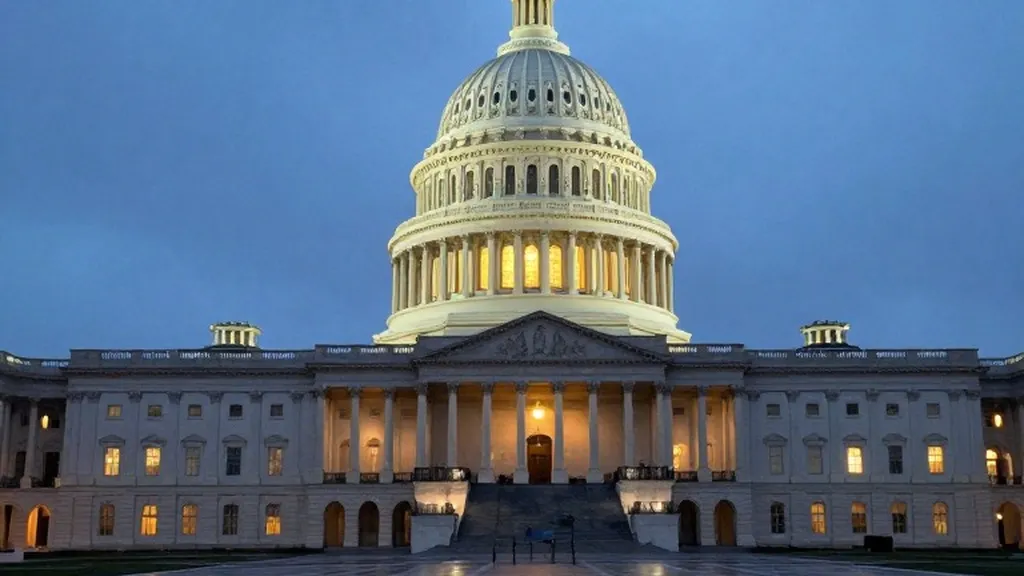
For the new Democratic leadership, the path forward is now clear, though the challenges Johnson outlined remain relevant. The party now holds the keys to the House, a position that will determine the pace and nature of legislative battles with the White House. The prediction of daily chaos may now be a matter of political strategy and institutional friction rather than a campaign warning. The incoming majority will have to navigate a complex landscape defined by the specific policy demands of their base and the economic conditions that drove voters to the polls in such large numbers.