Lithium-ion battery fires rise as safe disposal methods lag behind market growth
Experts cite energy-dense chemistry and falling production costs as key factors in the increasing frequency of ignition events.
By Andrew Yang ·
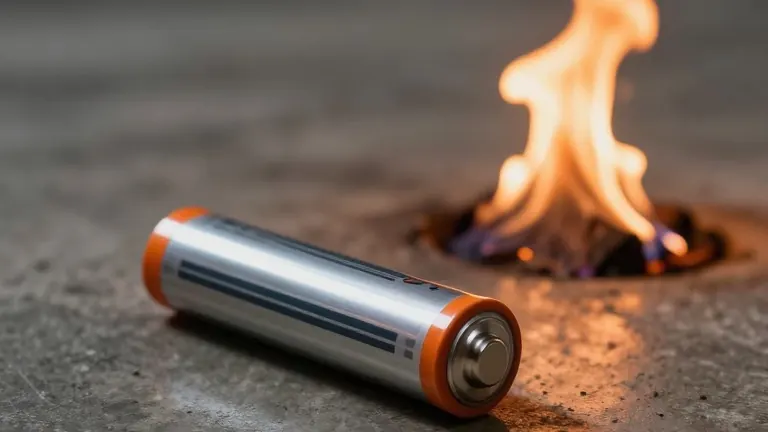
Lithium-ion batteries have become the dominant force in the rechargeable energy market, a shift driven by their high energy density and declining production costs. As consumer reliance on these power sources expands, safety experts report a corresponding increase in fires linked to battery malfunction.
The chemical composition allows a battery to transform from a stable energy source into a high-temperature fire in seconds. Under specific conditions, the units can ignite or explode, reaching temperatures comparable to volcanic eruptions. This rapid escalation poses a direct hazard to the devices within arm's reach of the average consumer.
Safety advocates argue that current disposal infrastructure is insufficient to handle the volume of these batteries. They assert that new tools are required to manage the risk and prevent further incidents. The difficulty in safe disposal remains a central concern as the technology continues to spread across various consumer products.
The FBI has also issued a warning regarding online extremism targeting children in gaming and social media environments. Officials describe these groups as predator networks that coerce victims into violent acts or self-harm. FBI special agent Heith Janke stated that many actors are motivated by nihilistic violent extremism, aiming to sow chaos and destroy society.
In Holbrook, Arizona, Atsuo Sakurai and his wife, Heather, operate Arizona Sake. The shop is located just off Route 66. The couple produces award-winning sake, a traditional Japanese alcohol made from fermented rice, using a 200-gallon vat. Sakurai noted that customers are often surprised to learn the beverage originates from this specific location on the historic highway.
A separate review of float therapy highlighted its potential health benefits. The treatment involves lying in a tub filled with nearly a thousand pounds of magnesium dissolved in skin-temperature water. The solution is dense enough to prevent the body from sinking. Sessions usually last at least one hour, with options to block out light and sound to reduce anxiety and pain.
More Business · Scam Watch · Report a business · Got a Story?