Northeastern Seattle Uses Ford Mustang for Student Robotics Research
A sensor-loaded electric vehicle collects 10 gigabytes of data per minute to help students build navigation algorithms for autonomous systems.
By Riya Zhao ·
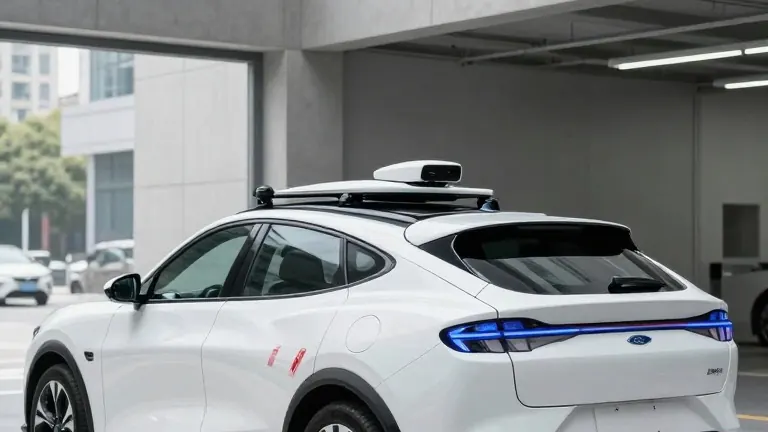
Students at Northeastern University’s Seattle campus are using a modified Ford Mustang Mach-E to collect real-world data for robotics projects. The vehicle, wrapped in the school's red and white colors, serves as a mobile laboratory for courses in electrical and computer engineering. It allows students to test hardware in actual traffic conditions rather than relying solely on computer simulations.
The car is equipped with four cameras, a LiDAR scanner, radar, GPS, and an inertial measurement unit. These components are mounted on the roof, inside the console, and in the trunk. The system includes eight terabytes of onboard storage. According to the university, the vehicle captures 10 gigabytes of data every minute while driving.
Xian Li, a professor of electrical and computer engineering, leads the Robotics Sensing and Navigation course. He drives the vehicle past downtown Seattle headquarters for Amazon, Microsoft, and Meta. Li stated that the car helps students understand the physical constraints of autonomous driving. He noted that simulations often fail to capture the complexity of real-world environments.
Xinlei Li, a master’s student, helped install the sensors in the spring of 2026. He said the experience allows him to work with hardware he might not otherwise access. He has used the navigation data to develop technology for the visually impaired. He emphasized the need to understand the strengths and weaknesses of different sensor types to create an accurate picture of the environment.
Vittoria Bitton, a master’s student in computer vision, is researching how environmental imagery can aid search-and-rescue operations in low-visibility areas. She previously worked as a senior software engineer at Rivian. Bitton is mentoring newer students and suggesting upgrades for the vehicle. She proposed adding an onboard neural processor to help the car interpret its surroundings in real time.
The Mustang currently uses Ford BlueCruise, a Level 2 hands-free driving system. Li and his students are working to modify the vehicle’s algorithms to approach Level 3 autonomy. This would allow the car to manage steering and speed without constant driver input. Li noted that Tesla’s vehicles also operate at Level 3 according to SAE International standards.
Elvis Madiba, a master’s student in robotics who previously worked in Nairobi, Kenya, is applying the lessons from the course to his own projects. He said the program encourages students to make mistakes as part of the learning process. Madiba plans to introduce a similar educational model in his home country to support local tech development.