Eight Vacant Seats Signal Discipline Push at China's Top Committee
The Communist Party opens a four-day session to enforce loyalty, with attendance at its lowest level since 1976.
By Andrew Yang ·
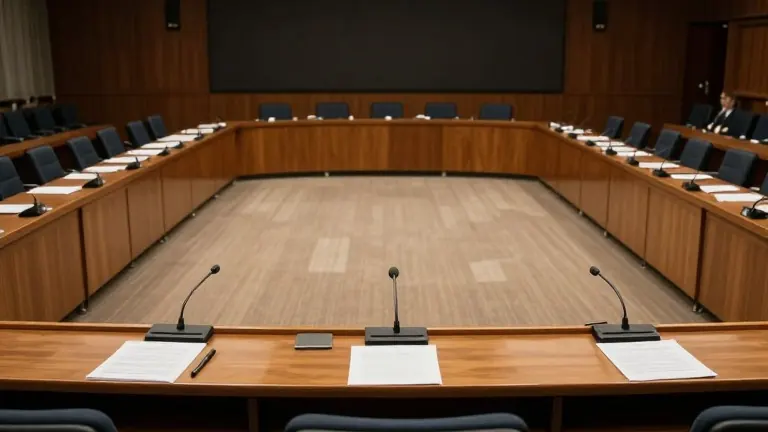
China’s Communist Party opened a four-day session on Monday to tighten internal discipline, a move that lands against a backdrop of low attendance and high stakes for leadership succession. President Xi Jinping is using the plenum to demand greater loyalty from officials while continuing his long-running anticorruption drive.
The gathering, known as the fifth plenum, is a closed-door meeting attended by roughly 300 members of the Central Committee. It marks the lowest turnout for this body since the death of former leader Mao Zedong in 1976. Eight seats on the committee are currently vacant, and an additional 15 members are under investigation and may be replaced during the session.
Xi’s administration aims to align the conduct of rising officials with Beijing’s strategic priorities. Ruby Osman, a senior policy adviser at the Tony Blair Institute for Global Change in London, noted that the plenum serves as a mechanism to ensure new generations of leaders share Xi’s assessment of China’s opportunities and risks. The meeting comes approximately one year before Xi is expected to secure a fourth five-year term as party leader.
According to Xinhua news agency, the committee will review a draft policy decision on advancing "full and rigorous party self-governance." The goal is to make cadres more disciplined, effective, and less corrupt. Neil Thomas, a senior fellow at the Asia Society Policy Institute, predicts the session will call for closer scrutiny of public spending and major projects. He also expects wider use of technology to uncover corruption and tougher consequences for officials who fail to meet leadership priorities.
The pressure on officials reflects a 14-year anticorruption campaign that has purged thousands of figures, including dozens of current committee members. In a January speech published by state media, Xi criticized "two-faced" officials who appear to comply with directives but "inwardly resist" them. He described such cadres as "politically opportunistic" and prone to "individualism."
The anticorruption drive has also reshaped the military leadership, removing five of the seven members of the Central Military Commission. The plenum may bring new appointments to that body or restructure the party’s control over the armed forces. These political maneuvers occur while China’s economy faces persistent weak domestic spending, a prolonged property crisis, and turbulent relations with the United States.