France’s aging population dilutes youth vote power amid school funding unrest
Demographic shifts have left young French protesters outnumbered by seniors, complicating their push for political change.
By Andrew Yang ·
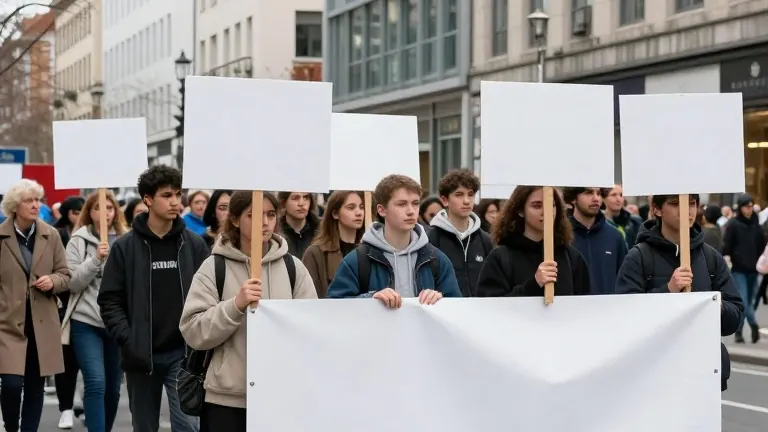
French high school students have spent weeks protesting underfunded schools and uncertain economic futures. Their demonstrations have evolved into a national debate on cost-of-living issues and police tactics. However, demographic data reveals that these young people are no longer the majority voting bloc in the country.
In 1968, teenagers and young adults made up 19% of mainland France’s population, totaling 9.4 million people. At that time, they comfortably outnumbered seniors, who accounted for just 13% of the population, or 6.3 million people. The balance has reversed. Today, there are 15 million people aged 65 and older, representing 22% of the population. This group now outnumbers the 9.6 million people between ages 13 and 24, who constitute only 14% of the total.
The postwar baby boom generation, born between 1946 and 1964, accumulated substantial wealth during the economic growth period known as the Trente Glorieuses. In France alone, this cohort has gathered approximately 9 trillion euros in personal assets. Experts refer to the impending transfer of this wealth to younger generations as the great transmission. Boomers also left behind a world dealing with climate change, high pollution levels, and ongoing conflicts in Ukraine and Iran.
Younger generations are inheriting record levels of public debt and poverty. These economic constraints limit the government’s ability to fund the specific demands of protesting students. These demands include better school infrastructure, more teachers, and improved post-graduation opportunities. Greta Thunberg, 23, attended a protest in the Paris suburb of Seine-Saint-Denis. She noted that these movements are connected across continents, stating that people often forget how linked Gen Z is globally.
Politicians are debating how to restore youth influence. Jean-Luc Melenchon, a 75-year-old far-left presidential candidate, supports lowering the voting age from 18 to 16. He hopes this change will increase turnout among young voters, who cast fewer ballots than other age groups in the 2022 presidential election. Luc Rouban, a 68-year-old researcher at Sciences Po, doubts many 16-year-olds would vote. He argues that young people lack political knowledge and are uninterested in traditional politics.
Teachers in affected areas report seeing heightened political awareness among students. Fred Salin, a 33-year-old teacher in Seine-Saint-Denis, described his pupils as politically sophisticated. Kamal Hachkar, a 49-year-old colleague, said students express deep anxiety about their future. He noted that for boomers who benefited from the Trente Glorieuses, the transition to adulthood was significantly easier. Students have also won concessions during the current protests, mirroring the political lessons learned by previous generations through street demonstrations.