Grid Upgrades Lag Behind Renewable Growth
Outdated infrastructure forces major nations to curtail clean power, creating a bottleneck for climate goals as UN talks begin.
By Andrew Yang ·
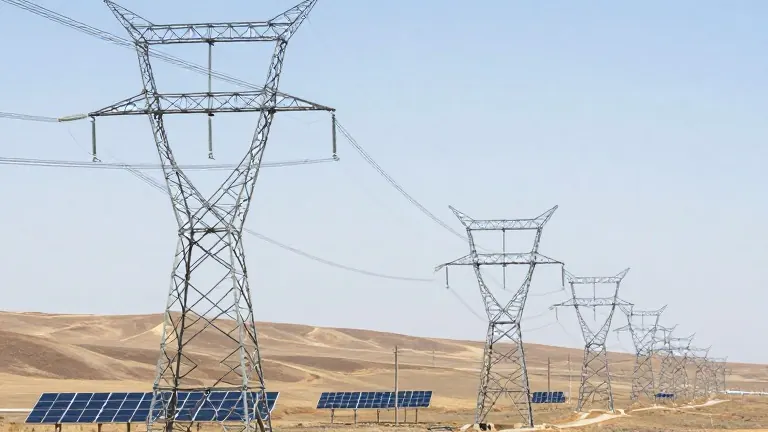
Old power infrastructure is preventing many countries from using the renewable energy they have already built. At United Nations climate talks opening this week in Antalya, Turkey, co-hosts Turkey and Australia are pushing for more ambitious goals to replace fossil fuels and upgrade electrical systems. Organizers describe modern, reliable grids as the backbone of the clean energy system, but billions of dollars remain missing for necessary upgrades.
The urgency of the issue has grown following the Iran war, which strained energy security globally. The United Nations launched a Global Grids Accelerator in September during the General Assembly. This initiative aims to speed up international funding for electricity infrastructure in Africa and Southeast Asia. Selwin Hart, a special adviser to the UN secretary-general on climate action, stated that a massive scaling up of grid investment is required to meet climate and development goals.
The International Energy Agency notes a disparity in spending. Annual investment in electricity generation has risen by almost 70% since 2015, reaching one trillion dollars a year. However, annual grid spending has increased at less than half that pace. To meet electricity demand through 2030, the IEA calculates that annual grid investment must increase by about 50% from the current level of four hundred billion dollars. The agency warns that delays in this spending will prolong reliance on fossil fuels and increase global emissions.
Jan Rosenow, a professor of energy and climate policy at Oxford University, said that power grids have not been readied enough for the scaleup of renewable generation. He noted that complacency in the past has turned the grid into a real bottleneck. Many existing grids were built as one-way roads for centralized power plants. These older systems struggle with the demand surges and bidirectional flows created by the renewable energy boom.
When grids reach their maximum capacity, operators must limit output from solar and wind farms, a process called curtailment. China curtailed 360 terawatt-hours of wind and solar electricity in the first half of 2026. This amount is close to the United Kingdom's annual electricity demand. India curtailed 11 terawatt-hours of solar generation over 15 months spanning 2025 and 2026 due to insufficient transmission and storage capacity. James Abraham of the Council on Energy, Environment and Water in New Delhi said that curtailing clean generation while burning fossil fuels is a blow to climate efforts.
Upgrading grids to be more flexible would allow electricity flows to adjust to supply and demand. This flexibility would help areas with excess solar and wind energy send power to regions with higher demand. It would also make it easier for utilities to exchange electricity with households that have solar panels or battery storage. Abraham stated that the need for these changes is immediate, describing the situation as a time tension rather than a technical one.
Gahee Han of Solutions for Our Climate in Seoul said that investment in renewables is outpacing grid development in Asia. She warned that without upgrades, the region will rely on gas or coal plants. The Association of Southeast Asian Nations is promoting an interconnected power grid plan to allow countries to trade power more easily. Abdul Razib Dawood, executive director of the ASEAN Center for Energy, said the current crisis creates an opportunity to strengthen regional cooperation.
The UN talks in Antalya will continue with discussions on these infrastructure gaps. The focus remains on securing the funding needed to match the rapid growth in renewable energy generation with the physical capacity to deliver that power to consumers.
More Business · Scam Watch · Report a business · Got a Story?