Kipnuk: A year of rebuilding after Typhoon Halong
FEMA funds are expected to make most homes livable by Thanksgiving, but the remote Alaska village faces a funding gap for replacement housing and a reopening date for its school.
By Andrew Yang ·
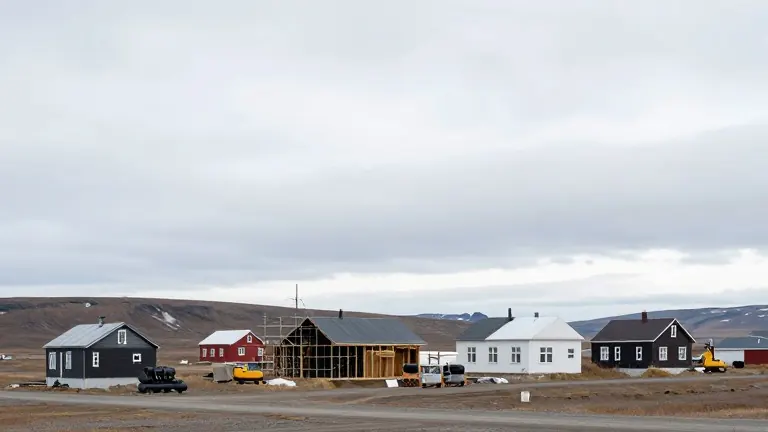
The village of Kipnuk, a community of fewer than 200 homes in Western Alaska, continues to recover from the damage inflicted by the remnants of Typhoon Halong a year ago. The storm destroyed infrastructure and displaced more than 1,000 people across the region. In Kipnuk specifically, the State of Alaska's Emergency Operations Center reported that 90% of residences sustained damage. Dozens of homes were swept off their foundations, some while families were still inside. A year later, hundreds of residents remain displaced, and many are uncertain when they will return to their village.
Repair crews are currently working on restoring the town's infrastructure. On a clear day in August, construction crew leader Eddie Chuckwuk used air compressors to raise a building back onto its foundations. Chuckwuk, who grew up in the community, has been working long days alongside several dozen other workers. He stated that the team is working as fast as possible to get people back in town. He noted that many residents prefer living in their ancestral homes rather than being placed in unfamiliar locations.
While physical repairs proceed, financial and structural challenges persist. According to state officials, most residents in Kipnuk did not have home or flood insurance. Federal Emergency Management Agency funds are expected to make most homes livable by Thanksgiving. These repairs include replacing wet insulation and fixing windows, doors, and roofs. However, the current funding is insufficient to return severely damaged homes to their pre-storm condition. The state is currently appealing for additional money to build replacement housing. No estimate exists for when the local school will reopen.
The displacement has also affected the social and cultural fabric of the village. Leona Paul, a cook who has been feeding the construction teams, observed that some residents, particularly older individuals, are too traumatized to return even if their houses are habitable. Many displaced families have moved to larger towns or cities like Anchorage. Residents report that living in urban areas has been difficult. Children who are accustomed to playing freely in the village must now watch out for cars. Additionally, fewer people are speaking Yugtun, the native language, and families are separated from loved ones and traditional hunting and gathering practices.
Some families have traveled back to Kipnuk for the summer to maintain cultural traditions. Burt Paul's family visited the village to gather salmonberries, known as naunraqs in coastal Yugtun. Paul stayed in Kipnuk after the storm to act as a community leader. He noted that the family's berry-picking trips were shorter this summer because they were limited to the time everyone was in town. Despite the shortened duration, Paul emphasized the importance of continuing these activities. He observed that seeing native plants growing and fish returning to the river provides a sense of stability.
The village faces a long-term vulnerability to climate change, which is making the area more susceptible to future storms. Most residents want to rebuild the village in a safer location. However, the FEMA funds received so far can only be used to restore the damaged structures in their current locations. Kipnuk has not yet secured the money needed to move the village. For now, residents are focused on the immediate repairs and the hope of eventually returning home.