Latino Economic Power: $4.4 Trillion GDP and Media Challenges
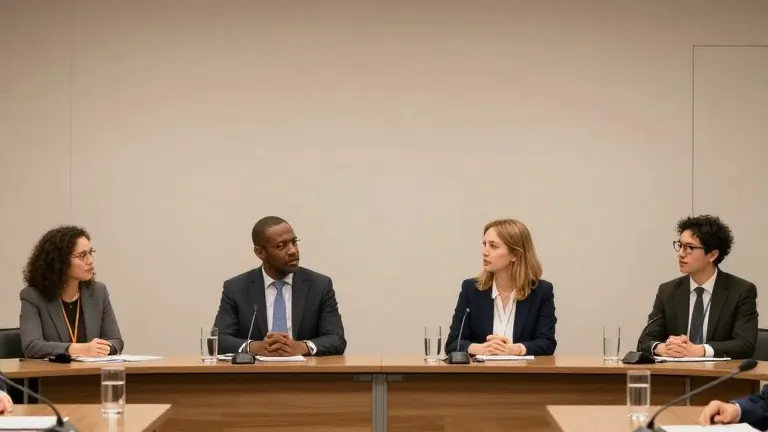
A panel at the Harvard Club of Boston discussed the growing economic influence of Hispanic Americans and the shifting ways the community consumes news.
By Elena Perry ·
The Hispanic community in the United States generated $4.4 trillion in gross domestic product in 2024. This figure surpasses the economy of Japan, making it the fourth largest in the world. The community now accounts for 21% of the U.S. population, with 70.1 million people as of July 1, 2025.
Phyllis Barajas, CEO of Conexión, opened a recent conversation at the Harvard Club of Boston. She stated that building bridges between different groups remains important during times of rapid change. The event took place on October 21 and was organized by Conexión and El Planeta with support from Eastern Bank Foundation and TQM Wealth.
Jazmine Ulloa, a reporter for The New York Times, discussed her book on the border history of El Paso. She argued that the border should be viewed as central to the U.S. story, similar to Ellis Island in New York. Ulloa noted that El Paso and Ciudad Juárez were once a single city with a complex history involving Indigenous, Spanish, Mexican, and American identities.
Javier Marín, founder of Tiempo Company, connected this history to the Treaty of Guadalupe Hidalgo signed in 1848. He emphasized the need to continue telling the story of these roots. Marín noted that his book on Latino television history begins with this same treaty that defined the current border.
Marcela García, a columnist for The Boston Globe, reported that TikTok has become a primary news source for many Spanish speakers. She described a problem with fake accounts using artificial intelligence to impersonate immigration lawyers. These accounts often provide outdated legal advice and charge fees for it.
Julio Ricardo Varela, founder of The Latino Newsletter, pointed out that major media corporations often abandon Spanish-language projects too quickly. He cited the closure of a Spanish-language podcast at The Washington Post. Varela stated that trust is built over decades of consistent presence in a community, not through short-term initiatives.
Ulloa observed that predicting the Latino vote is difficult because of the diverse sources of information the community uses. She said that traditional polling methods based on television viewing do not work for this demographic. Varela added that the community is not a monolith, consisting of bilingual, first-generation, and long-standing residents.
Pew Research Center data shows that 57% of Latinos say they live better than their parents. However, only 20% feel they have achieved the American Dream, while 27% believe it does not exist. The community contributed 28.2% of U.S. economic growth in 2024. In Massachusetts, 36.1% of Latinos receive SNAP benefits, the highest rate in the country.
The panelists agreed that sustained investment in local journalism is necessary. They warned that if established newsrooms vacate the space, misinformation will fill the void. The group emphasized that creators who publish daily and speak directly to their audience have earned significant trust.
More Business · Scam Watch · Report a business · Got a Story?