NYC Schools Share Buildings, Not Resources
Chancellor Kamar Samuels faces pressure to help underenrolled high schools in shared buildings pool academic offerings.
By Elena Perry ·
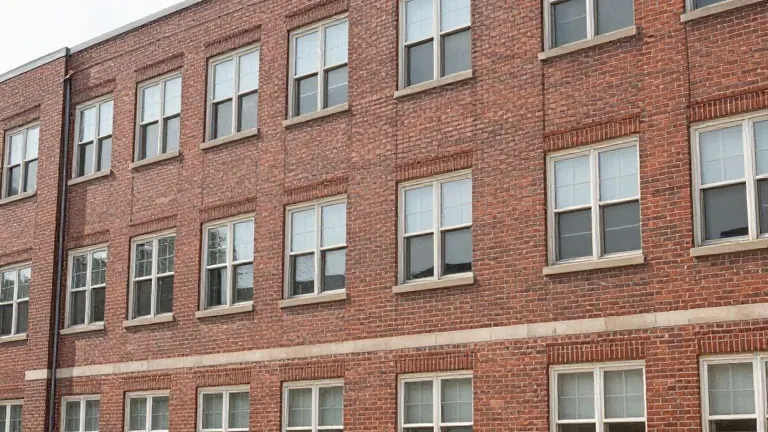
New York City high schools are shrinking, and many students are stuck in buildings with too few options. The city operates 72 high schools with fewer than 250 students that share campuses. These small schools often lack the staff to offer advanced math or science classes.
Johanna Bjorken, a parent leader, wrote to city officials in September after learning about the conditions at Murry Bergtraum High School for Business Careers. Her son attends Urban Assembly Maker Academy, which is located two floors above Murry Bergtraum in Lower Manhattan. The schools share a building and play sports together, but their academic offerings are vastly different.
Bjorken noted that her son takes Advanced Placement Calculus, while Murry Bergtraum had only one math teacher last year. That teacher offered only Algebra I and Algebra II. Some students at Murry Bergtraum must attend night school to meet graduation requirements. The school spends nearly twice the city average per student but still struggles to provide basic courses.
Chancellor Kamar Samuels has been in office for ten months. He has not announced a citywide plan to address enrollment declines. Instead, he asked five working groups to create blueprints for underenrolled schools. None of those groups includes high schools. Samuels told parent leaders this week that the Education Department is considering creating campus working groups for high schools, but no timeline has been set.
Principals on shared campuses are trying to solve the problem on their own. At the Theodore Roosevelt campus in The Bronx, six schools share advanced courses like calculus and statistics because no single school has enough students. Michael Barakat, principal of Bronx High School for Law and Community Service, said scheduling is difficult. He argued that students deserve access to calculus regardless of enrollment numbers.
Amy Piller, principal of Urban Assembly Maker Academy, said the current system pits schools against each other. Her school is a finalist for a grant to turn an unused locker room into a shared academic space. She wrote that the city should rethink what sharing a building means. The Education Department did not respond to questions about how it helps schools in the same building share resources.
Mike Sill, secretary of the United Federation of Teachers, said the department leaves principals to figure things out on their own. Some experts say sharing courses is a temporary fix. They argue the city should close or merge underenrolled schools. For now, many schools rely on informal agreements to give students more class options.