Boston proposes 17 school closures by 2030
The district aims to address declining enrollment, but a nearly five-hour public hearing revealed deep community resistance to the latest plans.
By Andrew Yang ·
Boston Public Schools will evaluate proposals to close three facilities this year as part of a wider plan to reduce the district by 17 schools by 2030. The district cites declining enrollment as the primary driver for these changes. The latest round of announcements targets Charlestown High, East Boston Early Education Center, and Greater Egleston High School.
The district announced the long-term facilities plan in 2025. Superintendent Mary Skipper and Mayor Michelle Wu revealed the plan to close Charlestown High in the final days of October. They followed that move with announcements regarding the East Boston Early Education Center and Greater Egleston High School on Monday. These proposals are part of the current year's long-term facilities recommendations.
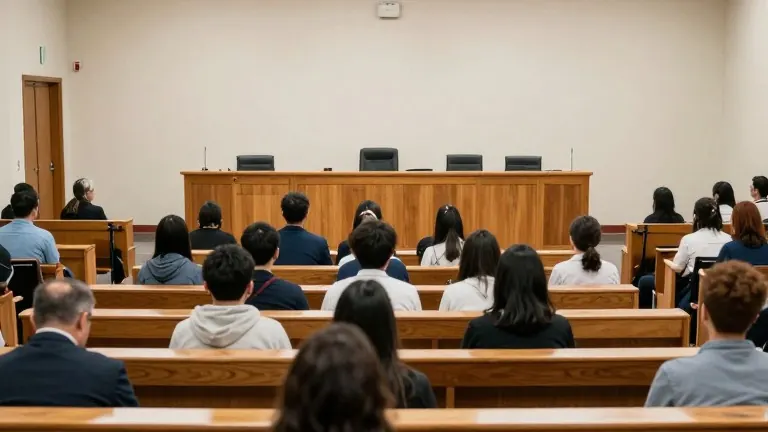
The Boston School Committee reviewed these proposals during a nearly five-hour public hearing on Wednesday. Members from the affected schools filled the room to voice their opposition. The testimony included a mix of emotional appeals and data-driven arguments. Speakers sought to persuade the committee to find alternatives to closing the buildings.
Ajay Trivedi, the head of Charlestown High, described the decision as a broken commitment by district staff. He stated that leadership informed him of the potential closure this spring during discussions about a different school's facility issues. Trivedi said he was promised a process in the fall to discuss enrollment and the school's future, but that process never occurred. He asked the committee to withhold approval of any plan that assumes displacement.
Supporters of the affected schools highlighted their unique roles in the community. They noted that Charlestown High has a singular open enrollment design. They described Greater Egleston High School as the most accessible alternative school option for underserved neighborhoods. Parents and staff at the East Boston Early Education Center pointed to community-centered programs, such as a food pantry, and proposed merging with the nearby McKay K-8 School instead of closing.
Liana Cosgrove, an art teacher at the East Boston school, urged the committee to merge the program with its next-door neighbor. She argued that a merger would ensure continuity for staff with historical connections to the community. She asked the committee to protect the school through a vote rather than closing it. Other speakers emphasized that the district had not adequately considered these specific community needs.
School Committee member Stephen Alkins questioned the timeline for these decisions. He noted that this discussion arrived one meeting earlier than last year's schedule. Alkins suggested extending the community process to allow for more alternatives to be considered. He wanted the district to analyze feasibility before announcing proposals, so communities would not feel left out of the cold.
Superintendent Skipper responded that the district is vetting all merger and closure options. She stated that the district has data to support its thorough review of the proposals. She emphasized the need to provide clear and timely information to students, families, and staff. The district will hold two sessions to hear from affected students. A virtual session took place on Saturday, and an in-person session is scheduled for November 19 at 5:30 p.m. at the Bowling Building.