Bridgehampton School Relaunches Sprouts Stand with Student Labor
A former Christmas tree lot is becoming a working farm stand where students grow and sell produce, funded by donations and integrated into the school's curriculum.
By Andrew Yang ·
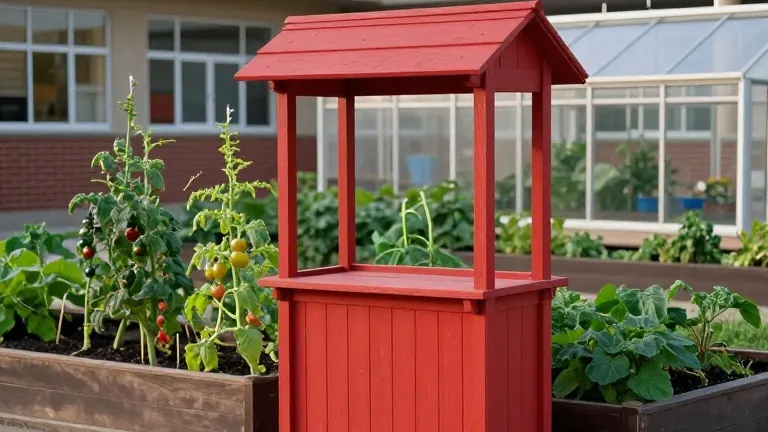
Bridgehampton School is reviving a small red structure on Montauk Highway as a working farm stand, shifting the site from a seasonal Christmas tree business to a year-round agricultural education hub. The school owns the property, known as Sprouts, which sits adjacent to the campus grounds. Administrators and staff are using the space to teach students practical farming skills while providing a venue for student-produced goods.
Alexandra DeSouza, the school's agriculture teacher, described the site as a living classroom. She took over the program from Judiann Carmack-Fayyaz, who initiated the initiative before moving to direct the Stony Brook Food Lab. The two educators now collaborate on the project. DeSouza noted that the stand is currently open for limited hours during the school week.
Currently, the stand sells cut flowers and bouquets arranged by students. All sales operate on a donation basis. The school plans to increase operating hours and expand the range of items available for purchase in the future. The goal is to make the stand a consistent part of the school's operations rather than a temporary exhibit.
Christine Tylee, the school's full-time horticulturist, manages the day-to-day activities in the greenhouse. The facility includes a large coop housing ten hens and one rooster named Oscar. The coop was constructed by parents several years ago. Tylee tends to late-season crops, including tomatoes, herbs, and loofah gourds. Earlier in the month, younger students harvested potatoes from the garden beds.
The curriculum adapts to student age. Younger learners focus on basic plant needs, seed planting, and food preferences. Older students study rooting hormones, soil sampling, and landscape design. They also examine the role of native plants in local habitats. Fourteen high school students are currently enrolled in the elective class, which includes an after-school component.
Harvests from the school garden primarily supply the cafeteria and culinary program. The farm stand serves as the final point of sale for produce that cannot be used in those internal programs, particularly during the summer when school is closed. This structure ensures that student labor directly supports the school's food service.
DeSouza said most students enjoy growing snap peas and peppers. She and Tylee noted that many students showed curiosity about less common crops like radishes and nasturtiums. The pollinator garden, developed with the nonprofit ReWild Long Island, has attracted hummingbirds and new species of wasps. The garden serves as an outdoor classroom and remains open to the public.
Tylee said the program aims to connect students with local farming communities and allied tradespeople, such as irrigation experts and equipment operators. The school hopes to recruit more high school volunteers for summer harvesting. DeSouza stated the goal is to build connections to local farms and introduce students to agriculture at an early age.