Fireworks Push New Delhi Air Quality Into Severe Zone
The Air Quality Index surpassed 350 in the capital after Diwali celebrations, despite court-ordered limits on conventional fireworks.
By Elena Perry ·
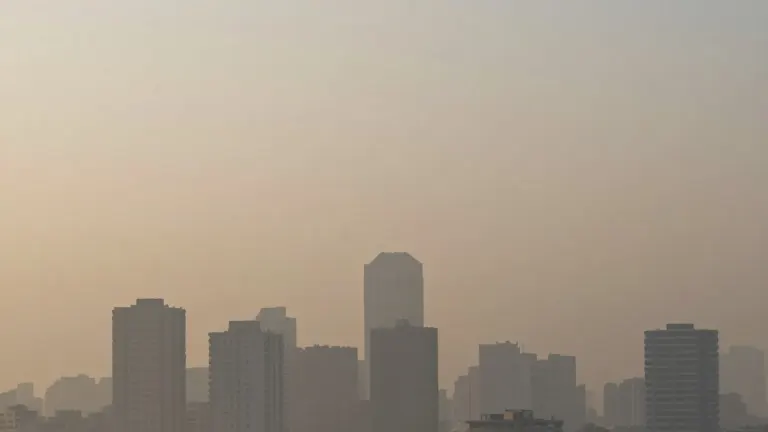
New Delhi residents faced a dense gray haze early Monday as the city’s Air Quality Index climbed past 350 in several districts. This reading places the air in the severe category, a level that poses direct health risks to the lungs and heart. The spike in pollution followed the Hindu festival of Diwali, which concluded on Sunday evening.
The conflict centers on the gap between court orders and local tradition. India’s Supreme Court issued a directive in October to cap Diwali-related emissions. The ruling allowed residents to use only approved green firecrackers for three-hour windows on Saturday and Sunday. Despite these rules, many citizens still set off conventional fireworks on Sunday. These traditional crackers produce higher volumes of smoke and fine particulate matter than their approved counterparts.
Monitoring stations across the metropolitan region recorded alarmingly high levels throughout Monday morning. Visibility dropped sharply as the smog settled over streets and high-rise buildings. The capital and its surrounding areas, which house more than 30 million people, frequently rank among the most polluted urban centers in the world during the winter months.
Several factors combine to create this annual crisis. The timing of Diwali coincides with the start of the cooler season in late October and November. Lower temperatures and weak winds prevent pollutants from dispersing. Additionally, farmers in neighboring states of Punjab and Haryana burn rice stalks to clear fields for the next planting cycle. The smoke from these crop-residue fires drifts into New Delhi, adding to local emissions from vehicles, industries, and construction sites.
City authorities have implemented a series of controls to manage the air quality. These measures include limits on construction activity and restrictions on the use of diesel generators. Courts have also sought to tighten the rules on firecrackers. However, these steps have not stopped the return of severe pollution each year. Environmentalists argue that long-term fixes, such as cleaner energy sources and stricter vehicle emission controls, are necessary to break the cycle.