South Africa's ruling party hits historic low in local vote
The African National Congress fell to roughly 30 percent of the vote, ceding ground in major cities and forcing complex coalition talks across the country.
By Andrew Yang ·

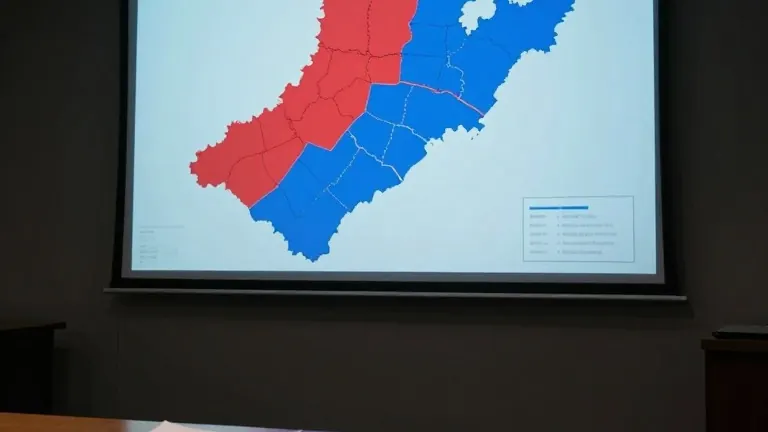
The African National Congress, the ruling party of South Africa, recorded its lowest share of the vote in local government elections on Sunday. With 99 percent of ballots counted, the ANC held approximately 30 percent of the total support. The Independent Electoral Commission expected to release final results late on Sunday.
The Democratic Alliance, the primary opposition party, captured roughly 25 percent of the vote in the near-complete tally. This result narrowed the gap between the two major parties to five percentage points. It is the closest the ANC has come to losing its status as the largest party in the country.
The ANC’s support has eroded steadily over the last decade. The party won 45 percent of the vote in 2021, marking the first time it dropped below the 50 percent threshold in any election. In 2024, the ANC lost its parliamentary majority for the first time, which necessitated a coalition government at the national level.
Fikile Mbalula, the ANC Secretary-General, described the local election outcome as a very catastrophic result for the party. He stated that the results required the ANC to be humble and to hear the people. Mbalula argued that the party must earn trust through service rather than slogans.
Geordin Hill-Lewis, leader of the Democratic Alliance, said his party had taken a big step forward. His party trailed the ANC by about 20 percentage points in the 2024 national election. Hill-Lewis expressed confidence in the DA’s goal to become the largest party in South Africa.
The vote fragmented across more than 500 contesting parties. Seven other major parties shared approximately 30 percent of the total vote. The MK Party, led by former President Jacob Zuma, secured the third-largest share at around 10 percent. Zuma was expelled from the ANC after breaking away from the group.
Voters cited failed public services as the primary driver of their choice. Many cities and towns experienced regular water and electricity outages, broken roads, and uncollected refuse. Corruption scandals linked to the ANC also remained a key issue. The election selected councilors for eight major cities, 44 district municipalities, and 205 local municipalities.
The ANC is on track to lose its position as the largest party in Johannesburg, Pretoria, and the Ekurhuleni municipality. The Democratic Alliance retained control of Cape Town. In Johannesburg, the DA ran Helen Zille, a 75-year-old former party leader, for mayor. Her campaign included a stunt where she snorkeled in a water-filled trench in a city road to highlight infrastructure failures. No party is expected to win a majority in most major cities, which means complex coalition negotiations will determine local governance.