Korean Producer: AI Token Fees Could Push Film Costs Above 35mm Levels
Studio Meta-K CEO Kim Kwang-jib warns that frequent re-renders and rising data costs threaten the financial efficiency of AI-driven feature production.
By Riya Zhao ·
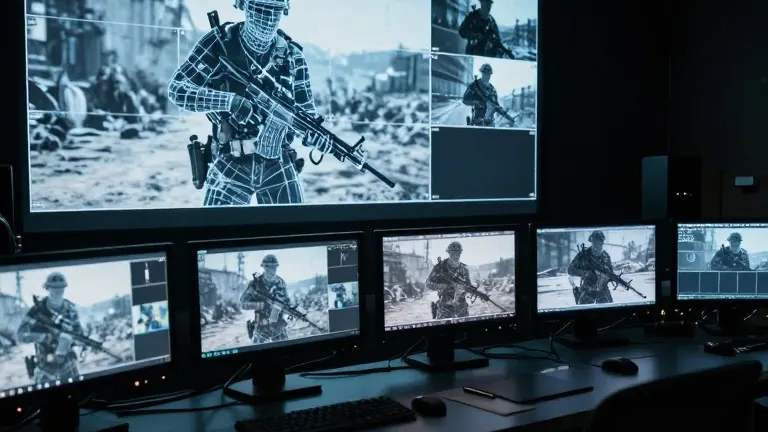
Korean AI content executive Kim Kwang-jib warned at the Taiwan Creative Content Fest in Taipei that artificial intelligence could eventually make filmmaking more expensive than the 35mm film era. Kim, founder and CEO of Studio Meta-K, stated that the token bill for a 100-minute film can exceed 500 million won, or approximately $366,000, when using high-end commercial tools. He noted that current low pricing is a marketing strategy while AI companies operate at a loss.
If token costs rise tenfold, production expenses could reach 5 billion won, or $3.66 million, which would exceed the cost of many current Asian feature films, Kim said. While Hollywood budgets of 200 billion won could absorb such increases, typical Korean and Taiwanese features, which cost between 3 billion and 5 billion won, would face a crisis of efficiency. The core issue is the cost of revisions; unlike digital cameras where reshoots are free, AI requires paid re-renders for every change.
Kim explained that if a client sends ten changes at once, Studio Meta-K re-renders the footage once. If those same changes arrive daily over ten days, the studio pays for ten separate passes. He argued that without meticulous preproduction, the cumulative cost of these iterative re-renders could outpace traditional celluloid workflows.
Lee Sang-wook, head of the AI Content Lab at MBC C&I, confirmed that budgeting remains difficult as tools update weekly. His lab spent about a year and four months producing the 139-minute feature 'Raphael,' with some shots requiring 10 artists for a full day. The film, which received backing from Korea's Ministry of Culture, Sports and Tourism, opens in Korean cinemas on November 25. Lee noted that the market reaction to AI shorts in 2024 was cold, prompting a push for theatrical releases to validate the format.
Kim highlighted that AI has drastically cut commercial production costs. A Pizza Hut spot that previously cost 2 billion won and eight months now takes two weeks and 30 million won to produce in-house, a 90% reduction. However, he favors a hybrid model for features, using AI for large crowd scenes and live action for lead close-ups. Studio Meta-K is currently testing a pipeline where the entire film is generated in preproduction, with live action reserved for specific emotional moments.
The company raised 10 billion won in funding this month and is preparing for an initial public offering next year. It is also converting Im Kwon-taek's 1993 film 'Seopyeonje' into an animated feature for a theatrical release next summer. Kim predicted that while large crews will shrink, workers who master AI will replace those who do not.
Lee added that actors have warmed to the technology, particularly for dangerous scenes where AI can handle the visual risk. He compared the shift to the arrival of sound or digital cameras, noting that new roles like previsualization artists and continuity supervisors are emerging to maintain spatial and character consistency.
Kim concluded that while AI tools are easy to learn, film grammar remains difficult. He stated that the human element, specifically the 5% of creative decision-making, ultimately determines quality.
More Business · Scam Watch · Report a business · Got a Story?