Netanyahu seeks fourth term in tight race
Polls show neither the right-wing bloc nor the opposition commands a majority of the 120 Knesset seats.
By Elena Perry ·
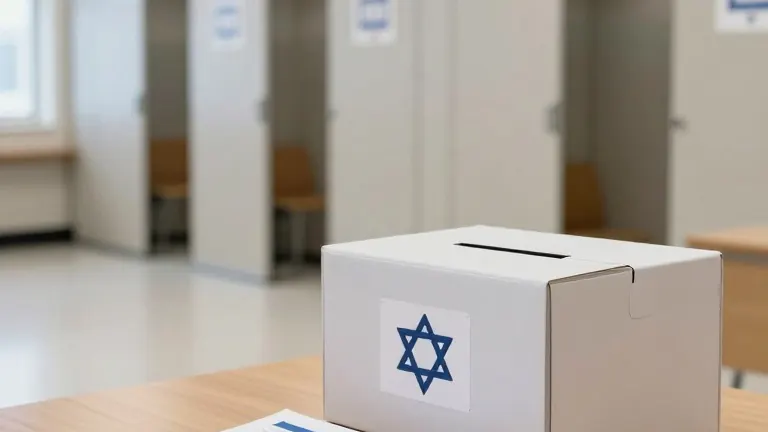
Benjamin Netanyahu, Israel's longest-serving prime minister, enters a decisive vote Tuesday as he campaigns for a fourth consecutive term. The race pits his Likud-led right and religious bloc against a diverse opposition group united only by a desire to remove the incumbent from power.
Polling data suggests a stalemate is likely. No side is projected to capture the 61 seats needed to form a government unilaterally. Yohanan Plesner, president of the Israel Democracy Institute, stated that an indecisive outcome is the most probable result. This could trigger protracted coalition negotiations, the formation of a minority government, or a repeat election.
The campaign has intensified with President Donald Trump’s public backing for Netanyahu. Trump warned last week that the United States might have to handle the Iran conflict alone if Netanyahu loses power. He said, “If Israel has the wrong Leader, which would be anyone other than Bibi, America will have to do this work ourselves, and I am not inclined to do so.” Netanyahu uses this support to argue he is the only leader capable of preventing Iran from gaining nuclear weapons.
Gadi Eisenkot, a former military chief of staff, leads the opposition bloc. Eisenkot lost his son and two nephews in the Gaza war and previously served in the war cabinet alongside Netanyahu. He accuses the prime minister of using fear to maintain control. Eisenkot said, “This time, it won’t work for him.” His platform includes launching a state inquiry into the October 7, 2023, security failures, a step Netanyahu has previously blocked.
Voter turnout will determine the final tally. Arab Israelis, who make up roughly 20 percent of the population, have historically shown variable enthusiasm for voting. Jehad Abomoch, a cafe owner in Baqa al Gharbiya, said his community feels it has “no hope, no future” under Netanyahu. Two new parties focused on drafting ultra-Orthodox men into the military are also hovering near the threshold for Knesset representation, adding further uncertainty to the count.
If no clear winner emerges, Israel faces a complex path forward. Parties may switch sides, a scenario with recent precedent. Alternatively, the opposition could seek a minority government by securing more seats than the right, even if they do not reach a majority. Israel held five elections between 2019 and 2022 due to similar deadlocks, setting a precedent for a quick return to the polls if coalition talks fail.