Economy Tops Ballot as AP Poll Shows Low Approval
AP-NORC data indicates that high prices and economic anxiety are driving voter sentiment on Election Day, with significant implications for congressional control.
By Andrew Yang ·
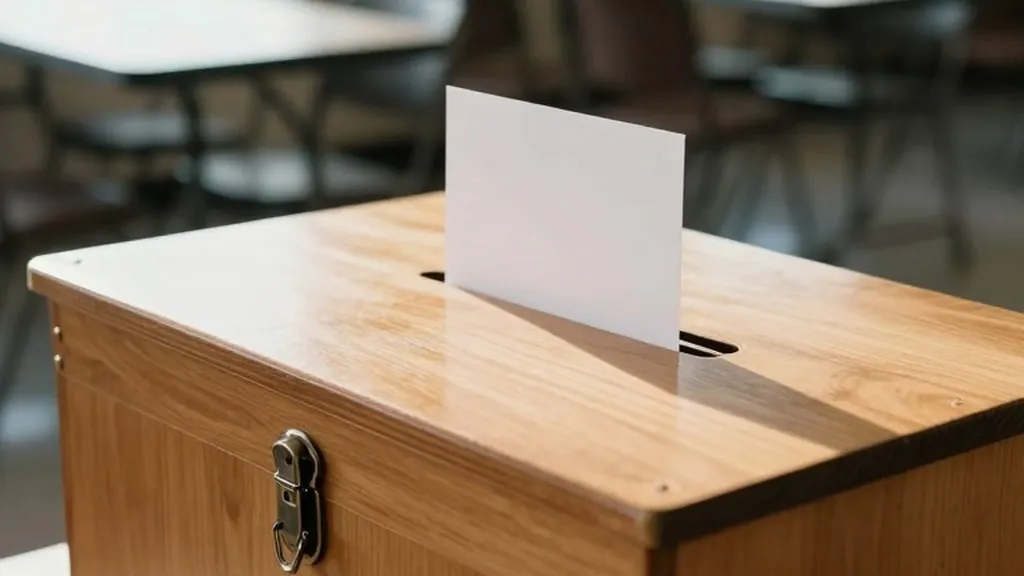
The 2026 midterm election is a referendum on President Donald Trump's second term, highlighting that voters are struggling with high prices and are angry over an unpopular war with Iran. Only 35% of U.S. Adults approve of Trump's job performance, while just 25% approve of his handling of the economy. About seven in ten adults say the country is heading in the wrong direction, and most blame the president for high prices. These figures suggest that economic concerns are the primary lens through which voters are evaluating their choices today.
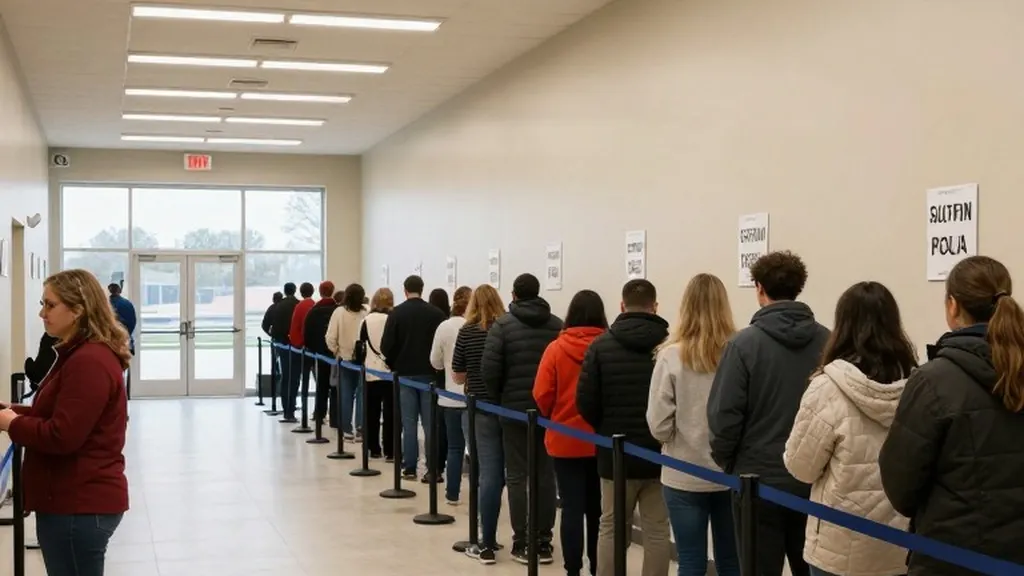
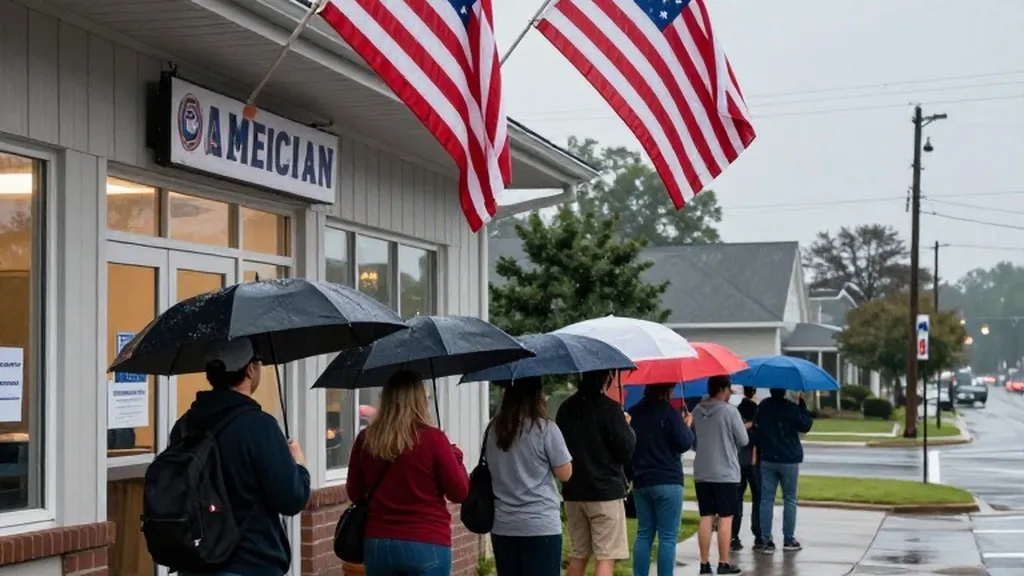
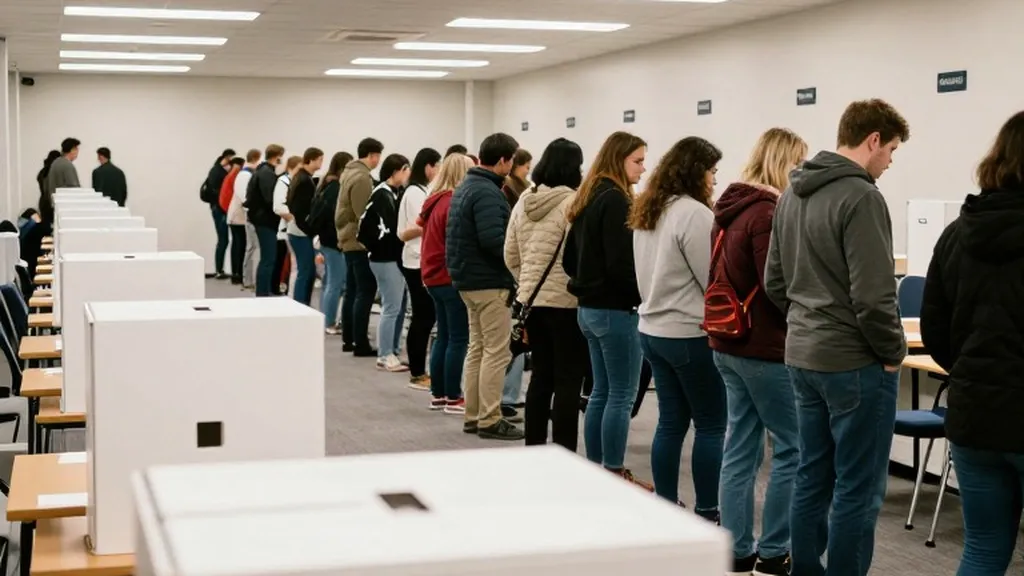
More than 57 million people had already voted as of Monday, surpassing the early vote of four years ago in many closely watched states. This high level of early participation indicates a strong interest in the outcome, particularly regarding the cost of living. Republicans were bracing to lose the House and fighting to hold the Senate, while Democrats were described as cautiously optimistic. The AP notes that one or two seats could tip either chamber, making the economic mood in swing districts a critical factor in the final tally.
President Trump held dozens of rallies in the final stretch, ending Sunday in Salina, Kansas, where he told supporters, 'I really want you to pretend I'm on the ballot.' His schedule also included stops in Mississippi, South Carolina, and Texas. Despite his active campaign, many Republican candidates kept their distance from the president. Trump has continued to make claims about voting fraud, including assertions that noncitizens vote in large numbers, which has added tension to the election administration process.
In Palm Beach Gardens, Florida, voter Mark Barker expressed his support for the president, stating, 'I've just been following Trump the whole time. I really think he's doing an awesome job.' This sentiment reflects the base of the Republican party, where economic optimism or loyalty to the leadership often outweighs concerns about price increases. Conversely, in Raleigh, North Carolina, voter James Moore, a 57-year-old librarian, cited financial strain as his primary concern. Moore said, 'I'm paying more taxes. I'm paying more for my healthcare. I'm paying more for everything.' His comments illustrate the perspective of voters in states that voted for Trump in 2024 but are now grappling with the daily impact of inflation and tariffs.
Economic strain and tariffs have made states like Maine competitive, with Sen. Susan Collins facing Democratic former state Senate President Troy Jackson. In other battlegrounds, such as North Carolina, Democratic former Gov. Roy Cooper is running against former Republican National Committee chair Michael Whatley. These races are being closely watched as indicators of how national economic sentiment translates into local votes. The AP also highlighted that the election will likely be the most expensive in history, with Republican committees outraising and outspending Democratic committees at the national level, aided by Trump-affiliated groups and Elon Musk.
However, at the candidate level, Democrats outraised their opponents. An AP analysis of AdImpact data shows that 88.1% of Republican general election TV ad spending went to states and districts Trump won in 2024, including more than $850 million where he won by 10 points or more. This spending strategy suggests a focus on consolidating support in safe districts rather than heavily investing in competitive areas where economic anxiety is highest. RNC Chairman Joe Gruters emphasized the importance of turnout, stating, 'Everything depends on turnout. If we turn out our voters, we win, and that's what we've been planning for.'
Democrats are counting on the anger of voters who feel priced out of the market. DCCC Chair Rep. Suzan DelBene stated, 'The American people are angry. They want change.' If Democrats win even one chamber, investigations and possible impeachment proceedings become likely. House Democratic Leader Hakeem Jeffries, who would be the first Black speaker, has outlined a 100-day agenda focused on the cost of living and oversight. A strong Democratic performance could also boost potential 2028 candidates like Gavin Newsom, JB Pritzker, and Pete Buttigieg, while complicating the path for Vice President JD Vance.
Republicans have tried to beat the historical midterm pattern, where a president's party almost always loses seats, by using redistricting. However, new districts in states like Florida and North Carolina may not vote as drawn. Six states are using new congressional maps after mid-decade redistricting, which could impact how economic voting patterns align with district boundaries. The AP notes that 21 Democratic-held districts voted for Trump in 2024, presenting a challenge for Democrats trying to hold onto seats in areas that shifted to the right in the last presidential election.
As polls open across the country, the focus remains on what voters are deciding: who controls Congress for the final two years of Trump's term. The results will determine the balance of power in the House and Senate, with Democrats needing a net gain of three districts for a House majority and four seats for a Senate majority. The high price of goods and services, as cited by voters like James Moore in Raleigh, is likely to be the deciding factor in many of these races. The election administration has faced some legal hurdles, including a federal judge temporarily barring the administration from a plan to prevent noncitizen voting, but the USPS has added resources to ensure mail ballots are counted on time.
Wall Street is watching the results with interest, as Reuters notes that the outcome could add to investor concerns about AI spending and debt ceiling negotiations. The economic mood of the country, reflected in the low approval ratings for the president's economic handling, is a central theme of this election. As voters cast their ballots, the question of whether the current economic direction is acceptable or in need of change will be answered by the final vote counts.