Haitian Gang 400 Mawozo Contacts State Agency to Seek Disarmament Dialogue
The group requests a pause in military operations to begin negotiations, while Salvadoran and Haitian forces continue joint strikes in Port-au-Prince.
By Andrew Yang ·
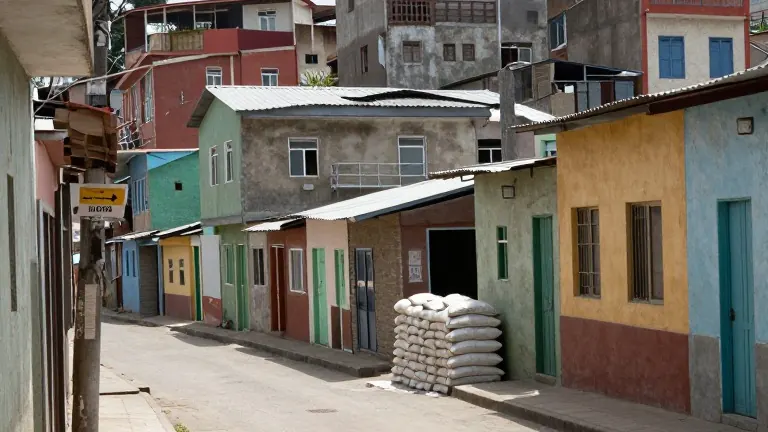
Haiti’s security situation has intensified in recent weeks as foreign troops and local police engage armed groups across the capital. Amid this conflict, one of the island’s most influential criminal organizations has formally requested talks with the state to begin a disarmament process.
The 400 Mawozo gang sent a three-page statement to The Associated Press on Friday. In the document, the group said it reached out to the National Commission for Disarmament, Demobilization, and Reintegration. The gang framed this move as an act of patriotic responsibility aimed at preserving human lives. It explicitly stated that seeking dialogue is not a capitulation.
The commission acknowledged that an individual contacted them on the group’s behalf. However, the agency noted that it operates in coordination with the prime minister's office. The commission said any dialogue must follow the roadmap proposed by the government. A spokesperson for 400 Mawozo told the AP that the gang is willing to engage in peace negotiations. The spokesperson added that disarmament is a long process.
When asked what the group seeks in exchange for negotiations, the spokesperson cited peace and the end of international interference. The gang also expressed concern over social media posts targeting the home of leader Wilson Joseph, known as Lanmò Sanjou. The letter described the residence as a symbol of peace within the de-escalation process. It cited the Geneva Conventions and the U.N. Charter to call for the protection of civilian property.
This diplomatic outreach occurred while violent operations continued in Port-au-Prince. Prime Minister Alix Didier Fils-Aimé announced on X late Friday that a gang leader was killed. The National Police identified the deceased as Mathias, the leader of the Boston gang operating out of Cité Soleil. Mathias was a well-known figure in the gang-controlled slum. Police said several other gang members were injured or killed in the joint operation.
The police urged residents to surrender illegal weapons to change their lives. The prime minister wrote on X that the gangs would not get any sleep. The letter from 400 Mawozo called for relevant military forces to suspend operations in specific areas. The group suggested this pause would allow for de-escalation and the protection of civilians while a lasting political solution is searched for.
The timing of the letter follows the deployment of more than 2,000 Salvadoran troops to Haiti. These forces arrived after four Salvadoran aviation technicians disappeared following an attack on Oct. 18. The United Nations stated that most Salvadoran personnel operate outside the U.N.-backed gang suppression force. That force works with Haitian police, the military, and Vectus Global, a private security firm founded by Erik Prince.
The gang’s leader wrote to the U.N. secretary-general on Nov. 1 to request a delegation for mediation. He expressed fear that the presence of Salvadoran troops could escalate violence. On Friday, Salvadoran President Nayib Bukele responded to a social media post tagged to him. He allegedly showed Joseph's home and wrote, Where is that house? Give us the exact address, and we’ll destroy it. El Salvador's government declined to comment on the matter.